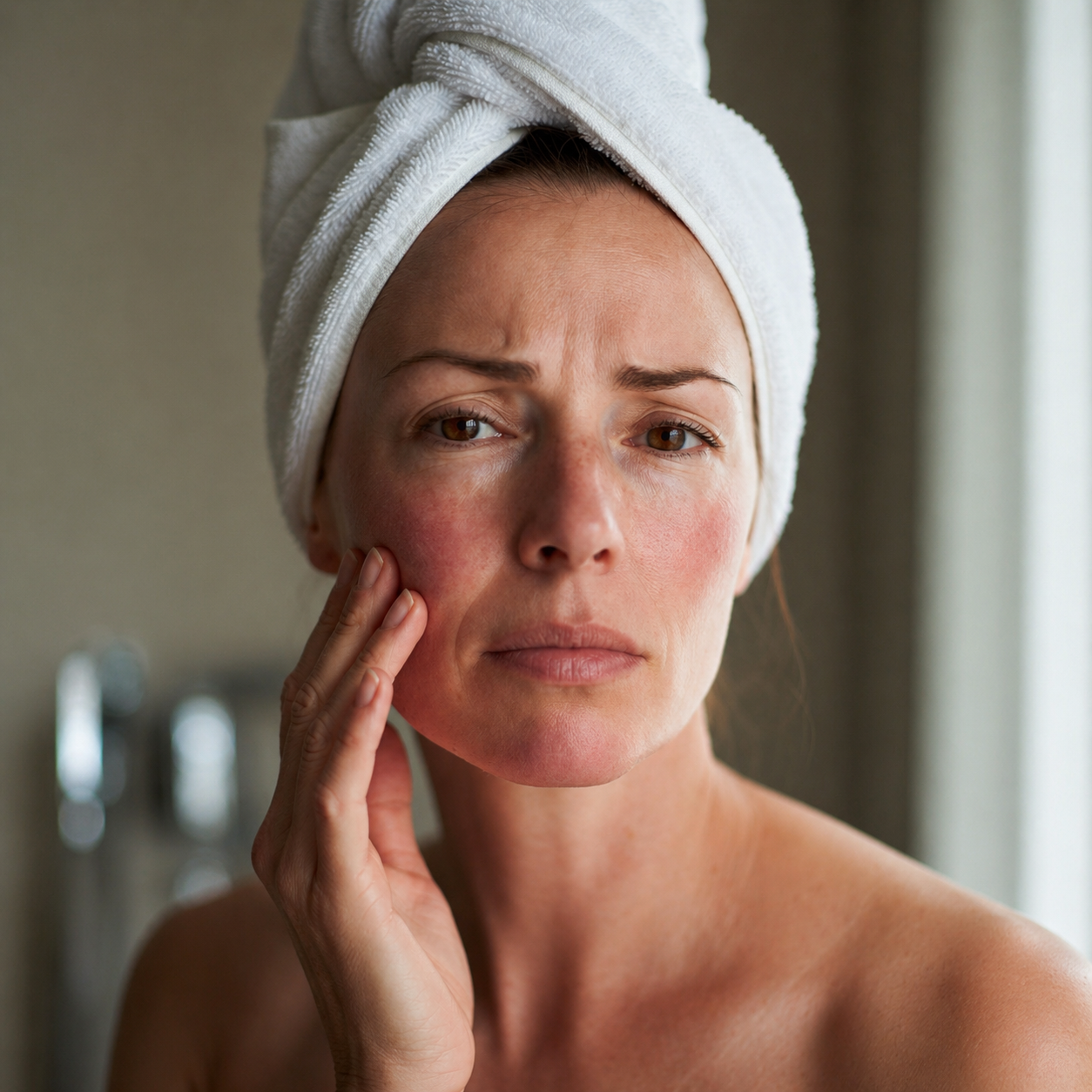
The skin remembers stress. This is not a metaphor: the hypothalamic-pituitary-adrenal (HPA) axis—the system that regulates the stress response—has functional receptors in the skin, and stress hormones have direct and documented effects on skin biology. The person who ages "all of a sudden" after a period of intense stress is not exaggerating: what they observe has a precise biological mechanism behind it.
The HPA axis and the stress response: what happens inside
When a stimulus is perceived as a threat, the hypothalamus releases CRH (corticotropin-releasing hormone), which stimulates the pituitary gland to secrete ACTH, which in turn activates the adrenal cortex to produce cortisol. This system, evolutionarily designed for acute, short-duration responses, produces very different effects when activated chronically and sustained, as occurs in modern life stress.
Cortisol and collagen: the relationship nobody wants to have
Chronically elevated cortisol has a catabolic effect on collagen: it activates metalloproteinases (MMPs) that degrade the dermal extracellular matrix, inhibits the synthesis of new collagen by fibroblasts, reduces the activity of prolyl-4-hydroxylase (the vitamin C-dependent cofactor enzyme that stabilizes collagen), and increases the degradation rate of proteoglycans, including hyaluronic acid.
Simultaneously, chronic cortisol alters the skin barrier function—reducing ceramide synthesis and increasing TEWL—and negatively modulates the skin microbiome. The combined result is drier, more reactive skin, with lower dermal density and a greater tendency to show signs of accelerated aging.
Why chronic stress is worse for the skin than acute stress
Acute stress—transient and followed by recovery—activates repair mechanisms that can be adaptive. Chronic stress—without sufficient recovery periods—keeps the HPA axis in sustained activation, with the described catabolic effects permanently present. Additionally, chronic stress persistently activates inflammaging: it chronically elevates IL-6 and TNF-α, creating a cycle in which stress fuels inflammation and inflammation amplifies the stress response.
Cutaneous manifestations of chronic stress
Chronic stress can manifest in the skin in multiple ways: acne breakouts (due to increased androgens and sebum), a greater tendency to eczema or dermatitis (due to impaired barrier and immune function), slower wound healing, increased dryness, and a visible acceleration of aging signs. These are not independent symptoms: they are different expressions of the same underlying biological state.
What strategies have evidence: nutrition, antioxidants, and habits
Interventions with the most evidence for reducing the impact of chronic stress on the skin act on multiple levels: stress management (regular physical activity, mindfulness techniques, quality sleep), an anti-inflammatory diet (reduction of sugars, increased omega-3 fatty acids and polyphenols), and internal antioxidant support. LEVIAL's antioxidant actives—astaxanthin, resveratrol, CoQ10, curcuminoids—act on the same pathways that cortisol activates: MMPs, NF-kB, and mitochondrial oxidative stress.