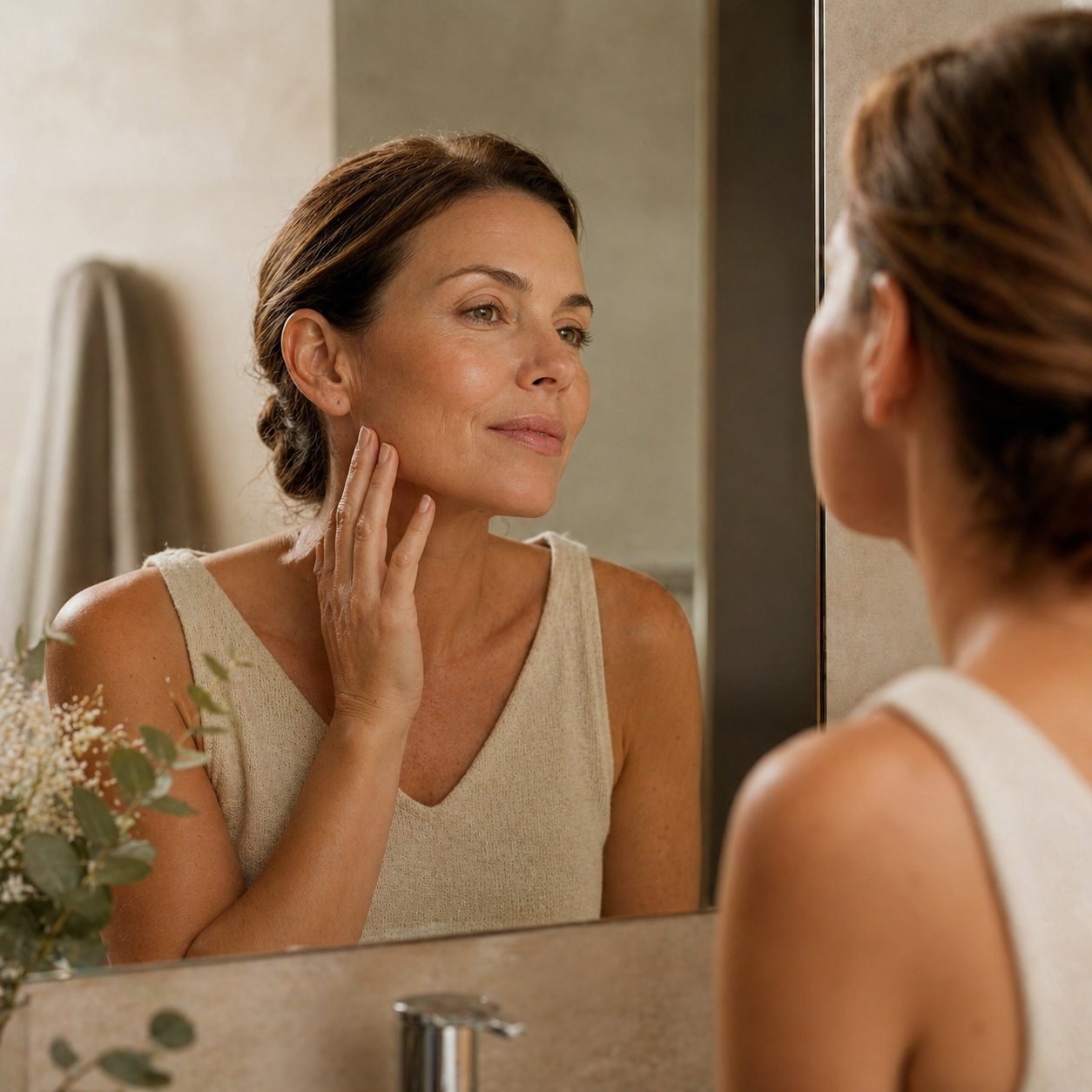
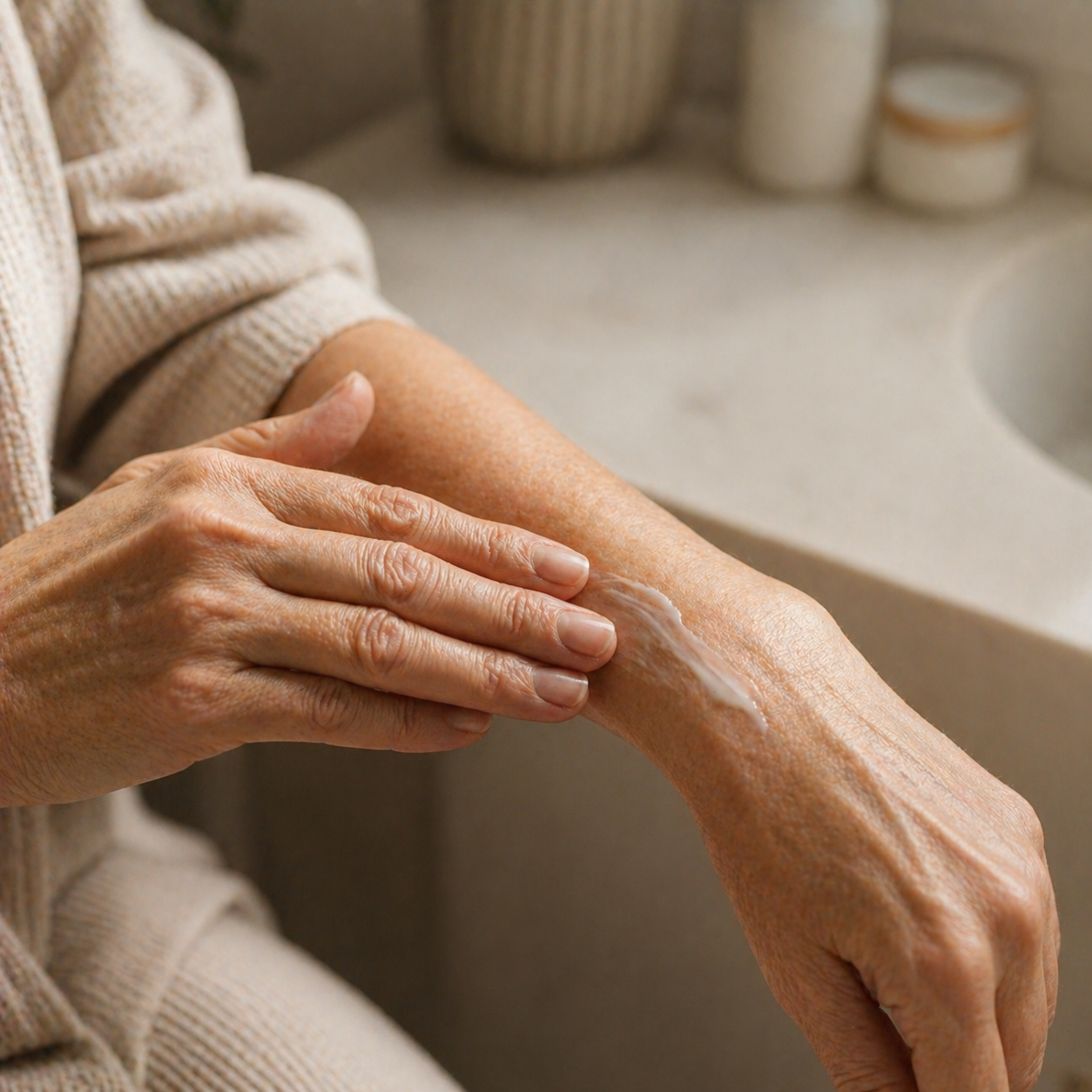
Photoaging is responsible for 80 to 90% of the visible signs of skin aging in people with unprotected sun exposure. Wrinkles, spots, loss of elasticity, irregular texture: most of these changes that we attribute to the "passage of time" are actually due to insufficient photoprotection over the years. Understanding the mechanism is not just informative: it changes what can be done about it.
UVA vs. UVB: different damage, same consequence
Ultraviolet radiation is divided into two main bands with distinct damage mechanisms. UVB radiation (280-315 nm) primarily affects the epidermis: it causes direct DNA damage to keratinocytes (forming pyrimidine dimers), produces sunburns, and is the main risk factor for epidermal carcinomas. Current sunscreens effectively block it.
UVA radiation (315-400 nm) penetrates deeper—reaching the dermis—and acts primarily through the generation of reactive oxygen species (ROS). It does not produce visible burns but damages collagen and elastin fibers, activates metalloproteinases (MMPs) that degrade them, and contributes to chronic pigmentation spots. UVA filters are less efficient than UVB filters in many products and are not as standardized.
Free radicals and metalloproteinases: how the sun destroys collagen
UV radiation—especially UVA—generates a massive increase in ROS in the skin. These free radicals directly activate matrix metalloproteinases (MMP-1, MMP-3, MMP-9), which are the enzymes responsible for degrading type I and III collagen and elastin in the dermis. At the same time, ROS inhibit the synthesis of new collagen by fibroblasts. The result is a double imbalance: more degradation + less synthesis.
This imbalance, repeated with every unprotected sun exposure over the years, is the main mechanism of photoaging. The accumulation of fragmented collagen and deteriorated elastin in the dermis is what produces the rough texture, deep wrinkles, and loss of firmness characteristic of photoaged skin.
Why sunscreen alone is not enough
Sunscreen is indispensable, and its daily use is the most effective documented intervention to prevent photoaging. But it is not perfect: no sunscreen blocks 100% of UV radiation, insufficient application in quantity and frequency significantly reduces its effectiveness, and it does not protect against oxidative stress generated by infrared radiation or high-energy visible light (HEV).
Furthermore, sunscreen does not repair accumulated oxidative damage from previous exposures. Oral antioxidants act at a different level: they reinforce the body's ability to neutralize ROS that the filter does not block and help maintain the skin's antioxidant network in a state of greater resilience.
Oral antioxidants and photoprotection: what the research says
The evidence on oral antioxidants as a complement to topical photoprotection is solid for several ingredients. Sies & Stahl (2004) documented the photoprotective effect of oral carotenoids, including beta-carotene and lycopene. Subsequent studies with astaxanthin have shown a reduction in markers of UV-induced oxidative damage and improvement in skin parameters related to photoaging.
Resveratrol has documented activity against photodamage through the inhibition of NF-kB and the reduction of the post-UV inflammatory response. Vitamin C and vitamin E act synergistically as antioxidants against ROS generated by UV radiation. None of these active ingredients replace sunscreen: they are an additional level of protection that acts on what the filter cannot cover.
Astaxanthin and photoaging: specific evidence
Astaxanthin has a particularly strong position in the evidence on oral photoprotection. Studies by Tominaga et al. and Hussein et al. have documented its protective activity against UV damage in human models. Its ability to completely cross the cell membrane—protecting both the inside and outside—makes it especially effective against photodynamic oxidative stress.
Complete protocol: external photoprotection + internal antioxidants
The most coherent strategy to prevent and slow down photoaging combines: daily topical photoprotection (SPF 30 or higher, with UVA filters, applied in sufficient quantity), topical antioxidants like vitamin C or niacinamide that reinforce superficial protection, and sustained internal antioxidant support with high-potency active ingredients like those found in LEVIAL. It is not an all-or-nothing approach: each layer adds up.