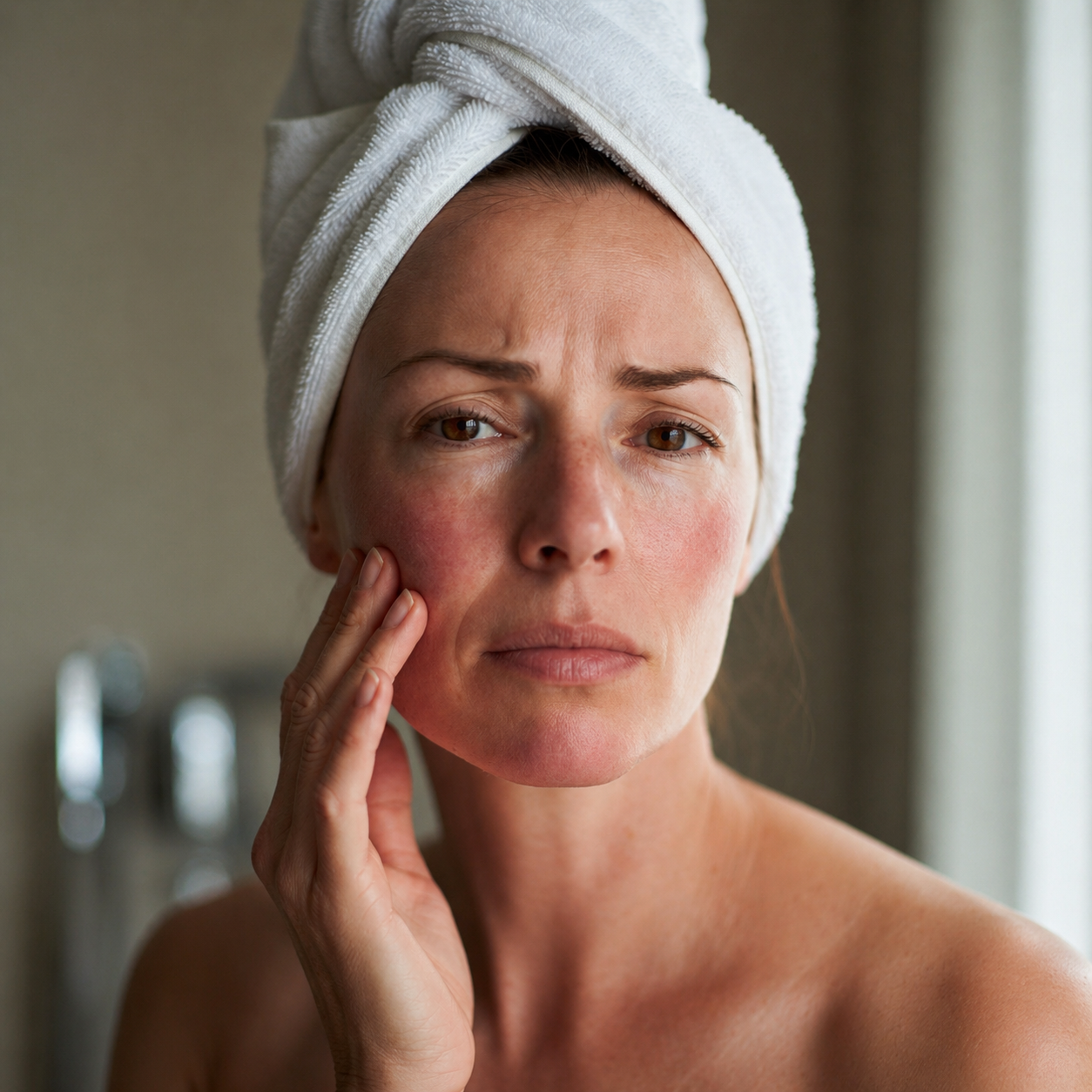
Luminosity is one of the most used terms in cosmetic marketing and one of the least precisely defined. "Your skin more luminous in 7 days" can mean almost anything. But there is real luminosity—structural, long-lasting, not dependent on the light of a photographic studio—and it has biology behind it. Understanding it changes what can be done to sustain it.
What luminosity really is from skin biology's perspective
Skin luminosity is the result of how skin interacts with light: luminous skin reflects light more uniformly and diffusely, without irregular absorption or surface irregularities that create shadows. Biologically, it depends on three main factors: the regularity and transparency of the stratum corneum (which acts as the first optical layer), the density and uniform distribution of melanin pigment, and the level of dermal hydration, which affects turgor and the "volumetrics" of the skin.
Cell renewal and stratum corneum transparency
When cell renewal is efficient, dead cells in the stratum corneum are shed regularly, and the outermost layer consists of young, well-hydrated cells that reflect light uniformly. When renewal slows down—due to age, dehydration, stress, or lack of exfoliation—dead cells accumulate, the surface becomes irregular, and the skin absorbs light less homogeneously, leading to that "dull" appearance.
Dermal hydration: hyaluronic acid from within
Deep dermal hydration—different from the superficial hydration provided by a cream—determines the turgor, "plumpness," and light reflection quality in the skin. Dermal hyaluronic acid is primarily responsible for maintaining this level of structural hydration: it acts as a water reservoir in the dermis and contributes to the volume and density that makes the skin "glow from within."
Oral supplementation with hyaluronic acid—such as the 45 mg of sodium hyaluronate per vial of LEVIAL—helps sustain deep dermal hydration. Studies like Michelotti et al. (2021) have documented improvements in perceived radiance and skin hydration with oral HA supplementation.
Oxidative stress and skin dullness
Chronic oxidative stress directly affects luminosity: ROS damage cell membrane lipids, alter melanin distribution, and contribute to a more irregular and dull coloration. Antioxidants—both topical and oral—are relevant here not only for their long-term effects on aging but because they maintain the skin's redox environment in a state that visually translates as better color and uniformity.
What cosmetics can do and what needs internal support
Topical cosmetics can improve luminosity by acting on the surface: AHAs and BHAs exfoliate the stratum corneum, topical vitamin C inhibits tyrosinase and improves tone, and hydrating active ingredients maintain superficial hydration. But structural luminosity—that which comes from a well-hydrated dermis and efficient cell renewal—requires that internal support is also functioning. This is the difference between a product's luminosity and the skin's luminosity.