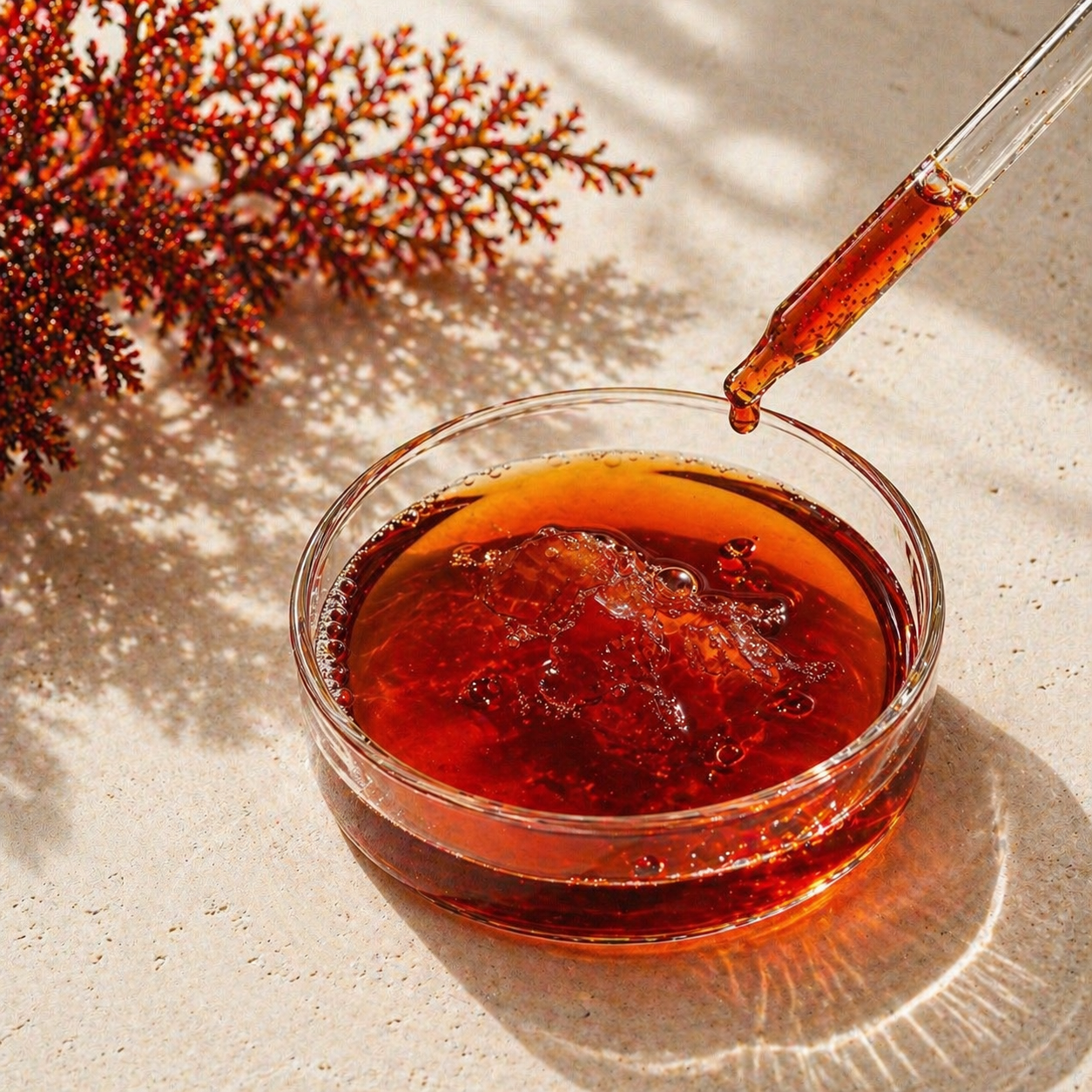
Nutricosmetics is a category that exists at the intersection of nutrition and cosmetics, and this makes it difficult to categorize for those unfamiliar with it. It is not cosmetic that you eat. It is not generic supplementation. And it is not the same as taking a multivitamin and expecting it to improve your skin. Understanding exactly what it is—and what differentiates it from all of the above—is necessary to evaluate whether it makes sense in a skincare routine.
Definition of nutricosmetics: between nutrition and cosmetics
Nutricosmetics is defined as the oral administration of nutrients, biological active ingredients, or functional compounds with the specific goal of improving or maintaining the health and appearance of skin, hair, or nails. The difference from conventional cosmetics is not in the objective—improving the skin—but in the route of action: while cosmetics act from the outside in, nutricosmetics acts from the inside out, through the digestive system and systemic circulation.
This distinction has specific biological implications. Topical active ingredients have limited penetration due to the barrier function of the epidermis. Oral active ingredients, once absorbed, reach the deep dermis—where fibroblasts that synthesize collagen, elastin, and hyaluronic acid are located—via the bloodstream, without the restrictions imposed by the skin barrier.
The difference between taking a multivitamin and taking a nutricosmetic formula
A generalist multivitamin is designed to cover basic nutritional deficiencies in a broad population. Its objective is sufficiency: to ensure that essential nutrients are not lacking. A nutricosmetic formula, on the other hand, is designed with a specific functional objective—the skin—and constructed with active ingredients that have published evidence on specific skin parameters: elasticity, hydration, dermal density, and protection against photoaging.
The difference is not only in objective: it is in design. A good nutricosmetic supplement selects reference ingredients with documented traceability (such as Peptan® or AstaReal®), combines them at real functional doses—not symbolic doses that only allow them to appear on the label—and considers the synergies between active ingredients. None of this happens by default in a general-purpose multivitamin.
Which active ingredients have real evidence in nutricosmetics?
The active ingredients with the greatest scientific support in nutricosmetics are: hydrolyzed marine collagen (especially Peptan® type I, with published studies on elasticity, hydration, and dermal density), natural astaxanthin (AstaReal®, with evidence in photodamage and elasticity), oral hyaluronic acid (with studies on dermal hydration), resveratrol (with evidence in anti-inflammatory pathways and sirtuins), and bioavailable curcuminoids (HydroCurc®, with studies on low-grade inflammation).
Mineral cofactors—zinc, selenium, copper—whose function in collagen synthesis and antioxidant activity is recognized by the EFSA with authorized claims, also have evidence. And vitamin C, an essential enzymatic cofactor for collagen synthesis, with the EFSA claim: "contributes to normal collagen formation for the normal function of skin."
European regulatory framework: what can and cannot be said
In Europe, food supplements are regulated by Directive 2002/46/EC and health claims by Regulation EC 1924/2006 and Regulation EU 432/2012. This means that no supplement can claim to "treat," "prevent," or "cure" any health condition, and only health claims expressly authorized by the EFSA after scientific evaluation can be used.
This regulation, although demanding, is a guarantee for the consumer: a brand that communicates within the European regulatory framework—like LEVIAL—must base its claims on ingredients with recognized evidence, not on generic promises. The difference between "contributes to normal collagen formation" (authorized EFSA claim) and "rejuvenates your skin in 30 days" (unauthorized claim) is not only legal: it is scientific.
Why format and dosage matter as much as the ingredient
A quality ingredient at an insufficient dose does not produce the effects documented in studies. Many supplements on the market include collagen, astaxanthin, or resveratrol on their labels but at symbolic doses, well below the functional ranges evaluated in clinical research. Reading a label critically means not only identifying the ingredients present but also verifying that the doses correspond to those studied.
The format also affects bioavailability: a pre-dissolved liquid does not require prior disintegration and facilitates absorption. A powder or capsule adds steps to the process. These are not irrelevant differences when the goal is for the active ingredients to effectively reach the dermis.
Who it is suitable for and who it is not suitable for
Nutricosmetics makes more sense for people who already have a minimally established external care routine and are looking to supplement it with internal support; for those who are in stages of greater skin nutritional demand (perimenopause, menopause, frequent sun exposure, high levels of chronic stress); and for those who value making care decisions based on evidence, not trends.
It does not make sense for someone who expects visible results in days, for someone who is not willing to maintain a continuous habit for at least 2-3 months, or for someone who is looking for a substitute for a balanced diet and a consistent lifestyle. Nutricosmetics is a complement to a comprehensive care strategy, not a shortcut.